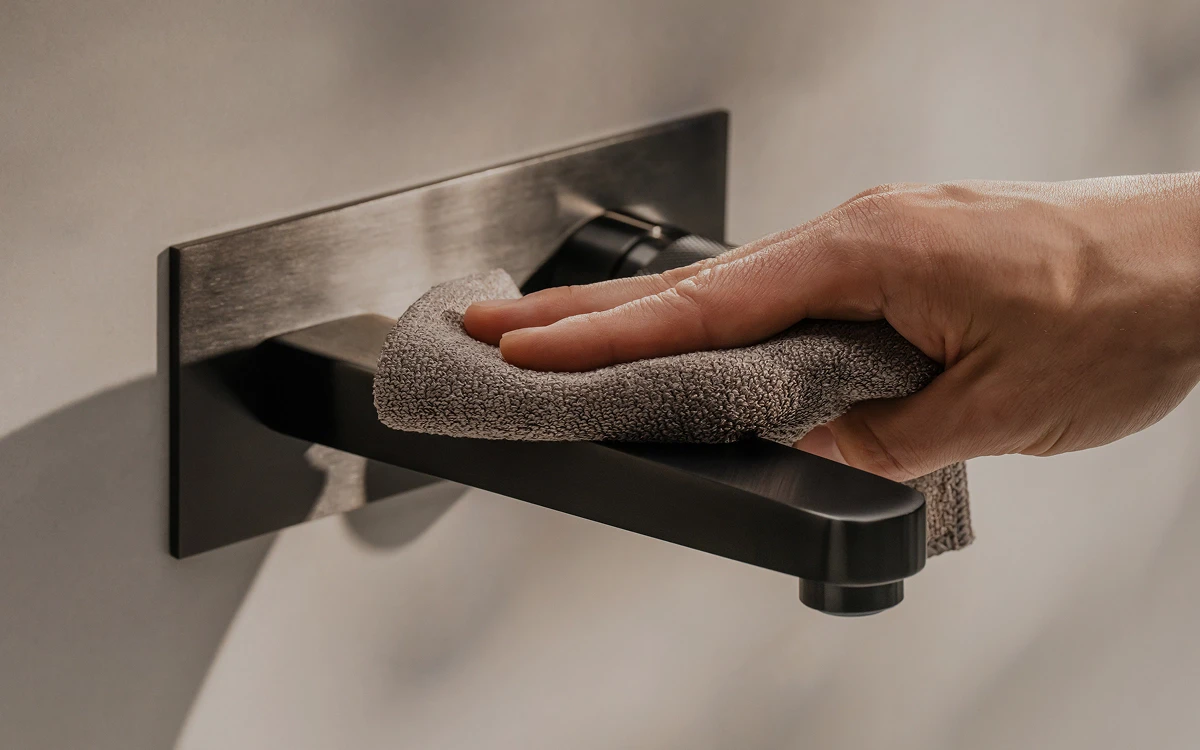
CRAFT OF CREATION | Kristina Busko
Kristina Busko’s creative process begins with the energy of a place and an initial emotional impulse, which gradually evolves into a fully realised concept. She works spontaneously, guided by colour, texture and everyday observation, shaping interiors that mature over time. Her approach balances hedonistic freedom with respect for function. Each project becomes a platform for personal, courageous decisions – independent of passing trends and firmly rooted in the present moment. In conversation with OMNIRES, the designer reflects on life in a Spanish town, the influence of architecture, art and craftsmanship, and the role of materials, detail and intuition in creating spaces that resonate, envelop and express authenticity.
Photos and videos: ZASOBY STUDIO | Interview: OMNIRES Editorial Team
BETWEEN HISTORY AND EVERYDAY LIFE
Kristina Busko’s apartment and studio, located in a small mountain village in the province of Alicante, form a space where everyday life intertwines with the creative process. Surrounded by historic architecture – including a 13th-century castle and a cathedral combining Gothic and Renaissance influences – she finds an inexhaustible source of inspiration and a backdrop for shaping her own visual language. In this intimate setting, far from the pace of major cities, she has found the freedom to live and create entirely on her own terms.
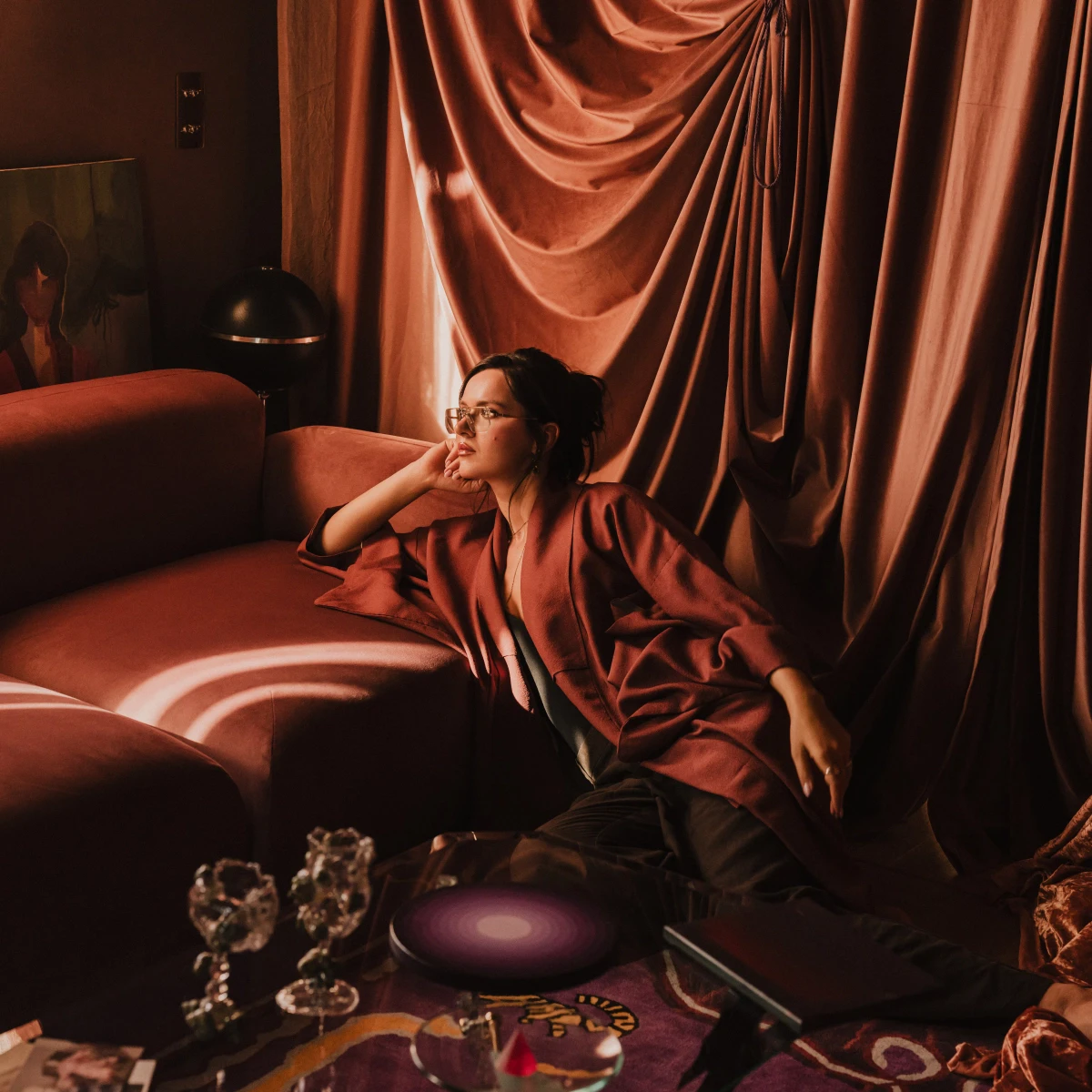
How did your journey into interior design begin?
It all started with drawing – though not interiors, but fashion sketches. I created silhouettes of women, garments and figures. I was fascinated by them. My grandmother owned albums filled with tailored suits from the 1990s, with broad shoulders and accentuated hips. I remember feeling a sense of awe. I observed how a single cut could transform the perception of an entire garment and wondered how such forms were constructed. I began experimenting with my own ideas and, already in lower secondary school, I was creating seasonal collections organised into folders – autumn–winter and spring–summer.
How has your style evolved over time?
Fashion taught me sensitivity to textiles – materials that offer freedom and flexibility. I still draw upon that sensibility in my work today. I see growth at every stage of my journey, influenced by the places I live and by my increasing confidence with colour. At the beginning, details such as mouldings, switches or artworks felt overwhelming. I admired great architects who effortlessly combined diverse elements – kilims, tapestries, vintage switches, frescoes hidden beneath plaster, Murano chandeliers – and wondered when I would be able to do the same. That remains my aspiration. I feel this is only the beginning, and I am curious about where the path will lead next.
What is your design process like?
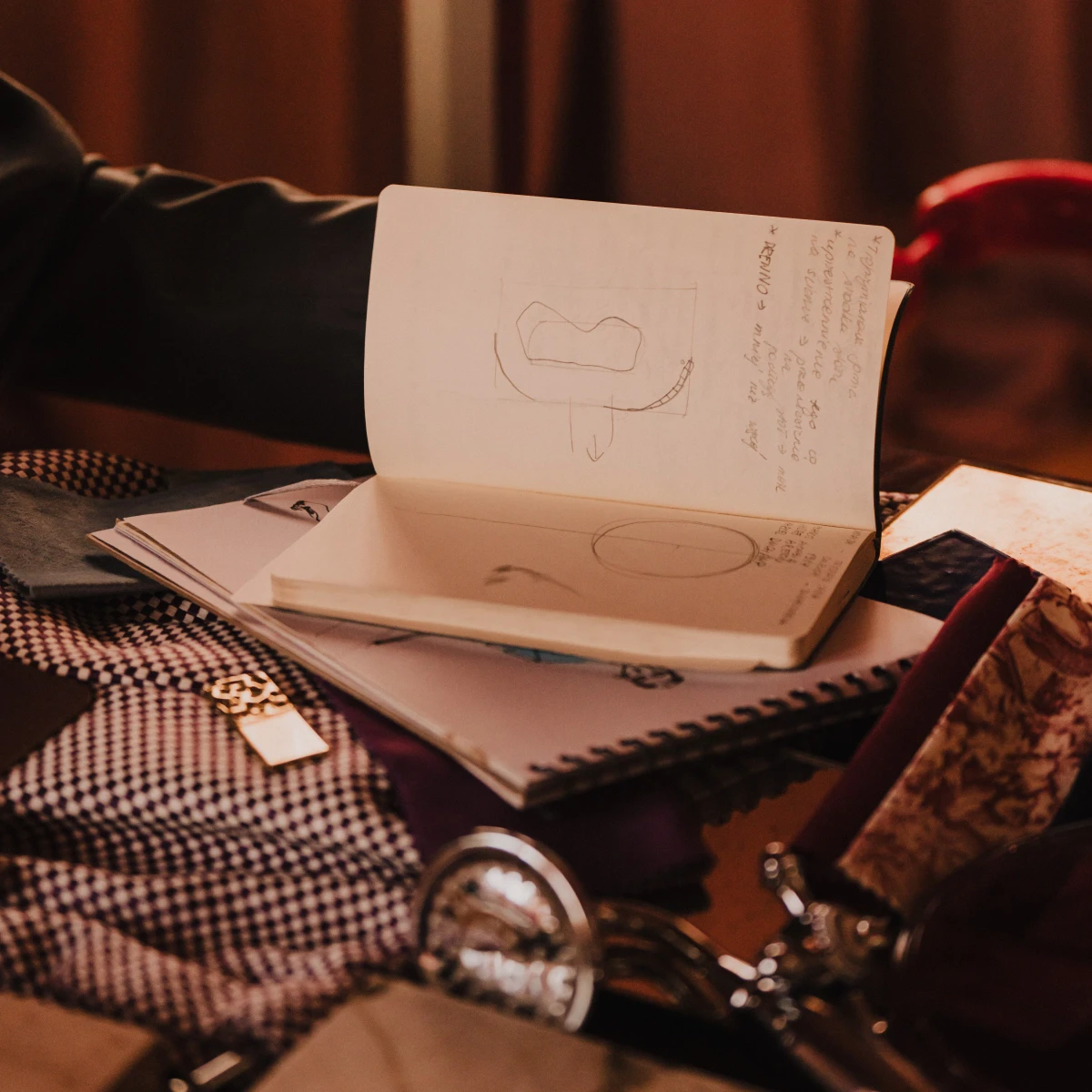
Painting follows a fundamental principle: moving from the general to the particular. In theory, interiors are approached in the same way – beginning with function, layout and spatial relationships. In my experience, however, the opposite often proves true. Sometimes a single object or one unexpected element is enough to initiate the entire process. It may be as fleeting as the sight of someone wearing green shorts paired with a pink T-shirt – a spontaneous colour combination that suddenly evokes the desire to design a space, even before knowing what that space will ultimately become. The sensation resembles narrowing one’s eyes: shapes, colour fields and contours begin to appear, while details remain blurred. Yet it is precisely this indistinct image that gradually solidifies into a concept – long before I consciously address function or technical structure. There are moments when I allow myself to wait several days before formally beginning a project. I know I need time for quiet reflection. I have learned that ideas mature naturally – they arrive when they are ready. It is simply a matter of time. I do not force myself to work from morning until night. Creativity follows its own logic and rhythm. Only by respecting that rhythm can something truly meaningful and enduring come into being.
When the idea appears, how do you translate it technically?
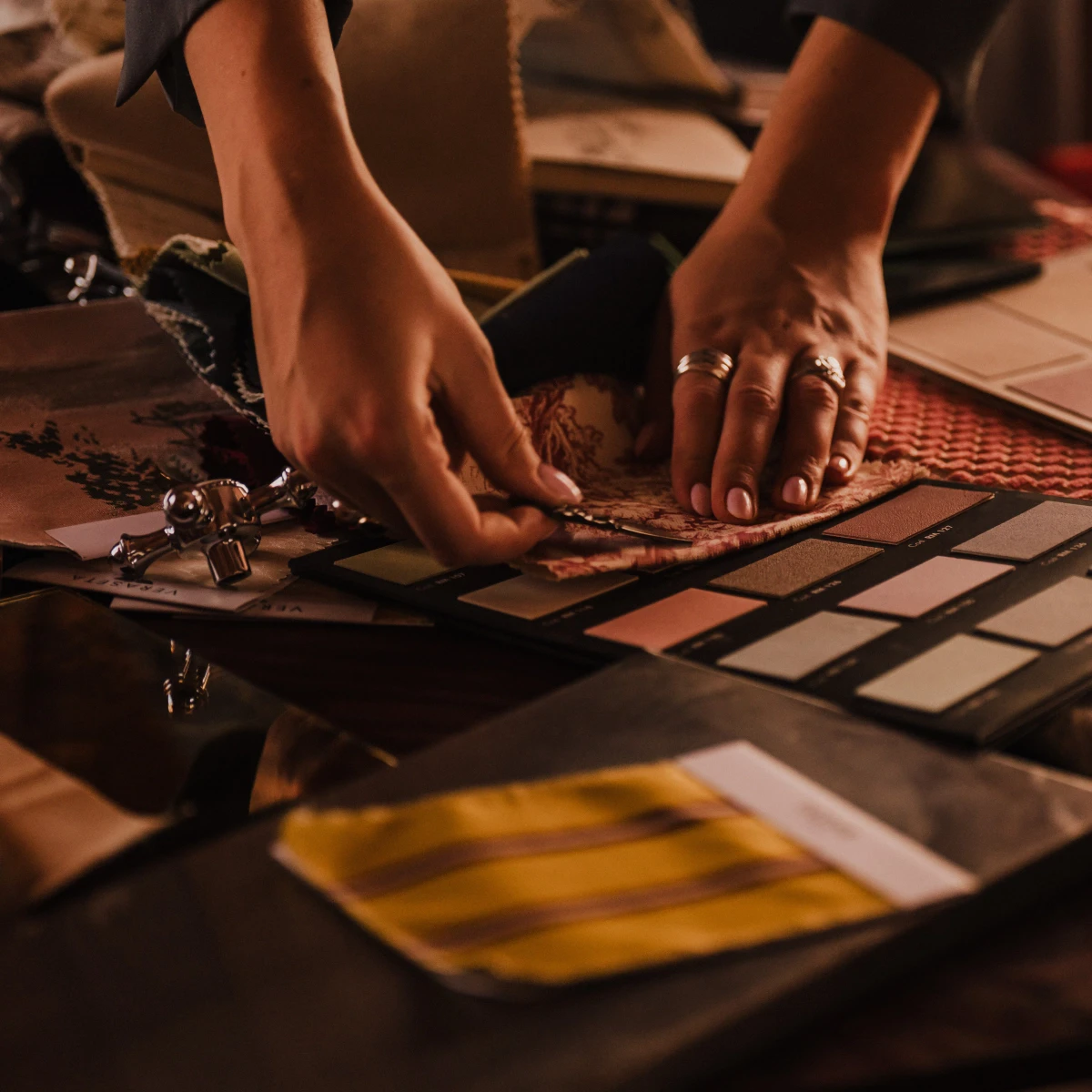
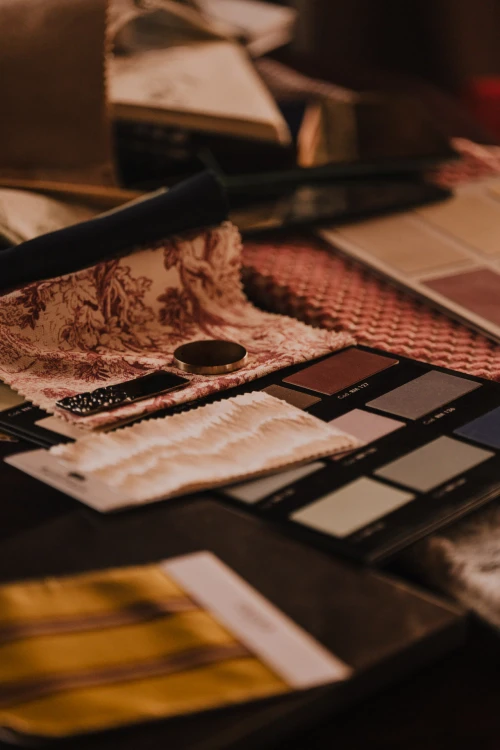
For years, my studio was mobile. I began most projects on a laptop – it was the only tool I could carry everywhere: to the beach, a café or on a journey. Only recently have I been able to spread my wings and work surrounded by material samples arranged across a table in my own studio. I thrive in creative chaos. I can't stand samples arranged with a ruler. When everything becomes too neat, I lose touch with the concept and forget what I aimed to accomplish. This is simply my process – and I don't need to justify this design mess.
How do you select materials and textures?
Tactility is fundamental. Sometimes colour recedes in favour of touch and surface. Each project develops its own internal logic, and the colour palette emerges in dialogue with the person who will inhabit the space. There are stages, trials, conversations. I usually begin with a proposal that differs from the original brief – I want to test client's trust and openness to surprise. Clients come to me for something they have not yet seen. If I were to offer only what is already familiar, the creative process would lose its meaning.
What story is told by the material board you have prepared for OMNIRES?
The set of materials I created for OMNIRES is an expression of play. Of risk. Of living fully in the present. This proposal is deeply authentic and inseparable from the place where I live and work. The entire composition is warm, enveloping and inviting. I wanted to explore a dialogue between unexpected materials — to present something as solid and weighty as stone in a vibrant shade of red, free from limitation or hesitation. Terracotta appears in multiple tonal variations, reflecting the hues of this region. Among them is Rojo Alicante marble — one of the most characteristic local stones. Polish ceramics introduce non-rectified tiles in cobalt and deep bottle brown. They are handmade, subtly irregular and varied in thickness. The composition is further enriched by textiles: my beloved jacquards, a blue fragment from a custom headboard, and violet and burgundy — wine tones so characteristic of Spain. They appear aged, and the look is finished off with retro chrome fittings that emphasize the interior's character.
THE ART OF CHOICE
Kristina Busko believes that historical objects and furniture bring the greatest meaning and emotional depth to interior spaces. In her view, they do more than complete a composition — they define its character and give it identity. Finding them requires time, patience and a willingness to search beyond the obvious, often outside conventional channels. The most valuable discoveries are made among local collectors and artisans who do not promote themselves publicly. Their knowledge, craftsmanship and profound respect for materials transform each object into a carrier of memory. With the same dedication, the designer draws inspiration from Poland, Italy and Spain. She believes that only objects with a history have the power to transform space into something truly distinctive and deeply authentic.
I cherish the moment when painterly frames emerge. It is the culmination of the entire process – I deliver a space, but also a carefully composed visual narrative.
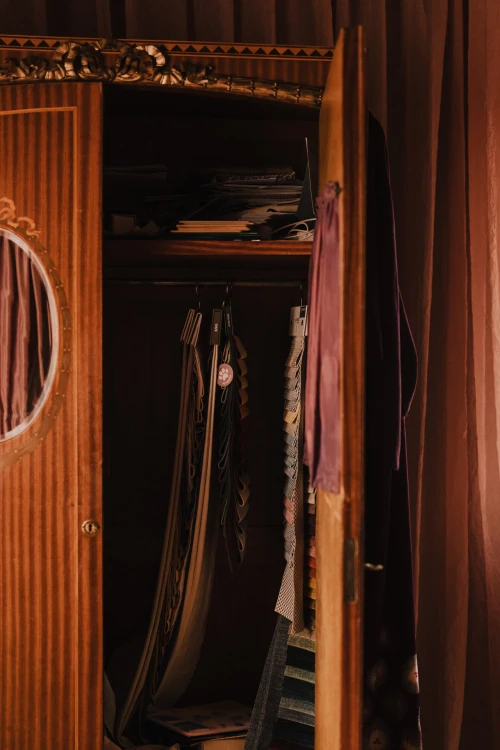
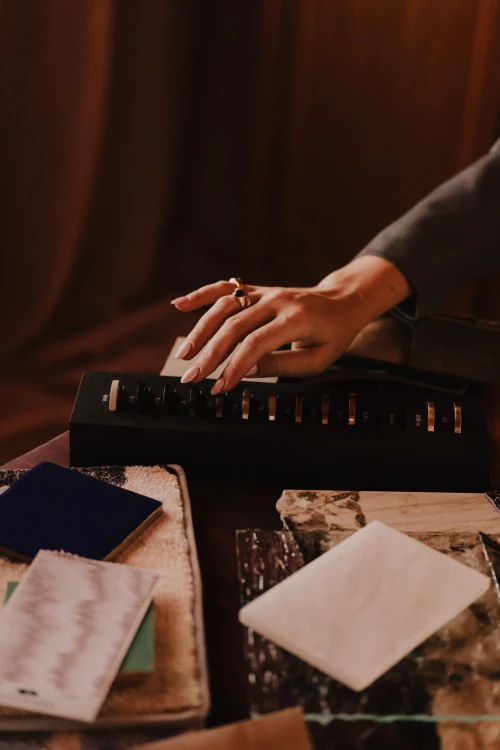
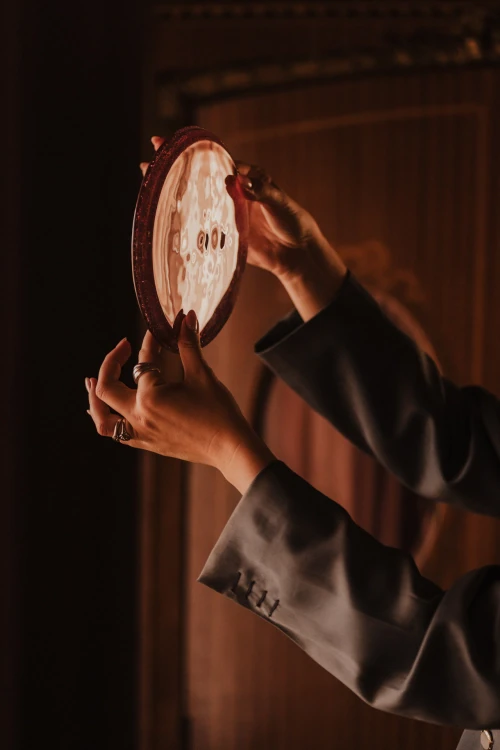
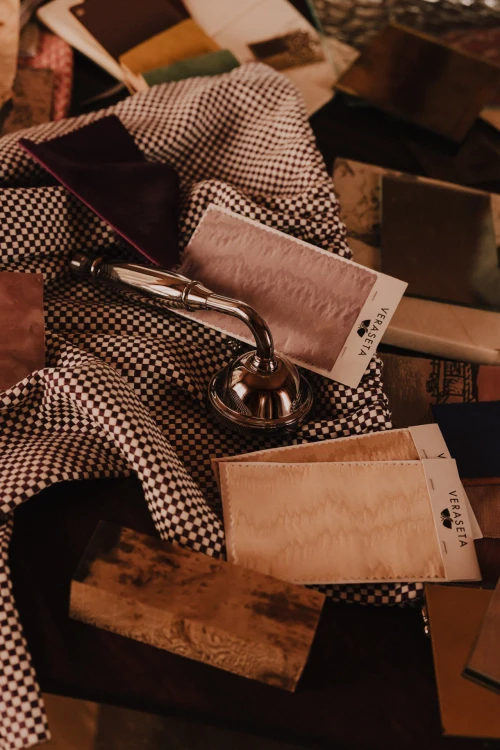
Soon, the OMNIRES Studio in Warsaw’s Powiśle district will be enriched with bespoke material compositions created by leading Polish interior designers, including Kristina Busko. Her material board becomes a compelling, emotionally charged story about the bravery of decision-making – an invitation to live in the present and trust intuition, regardless of shifting trends. Fittings from the OMNIRES RETRO series, which have a polished chrome finish, complete the ensemble and give it a sophisticated, multi-sensory feel.