FAQ
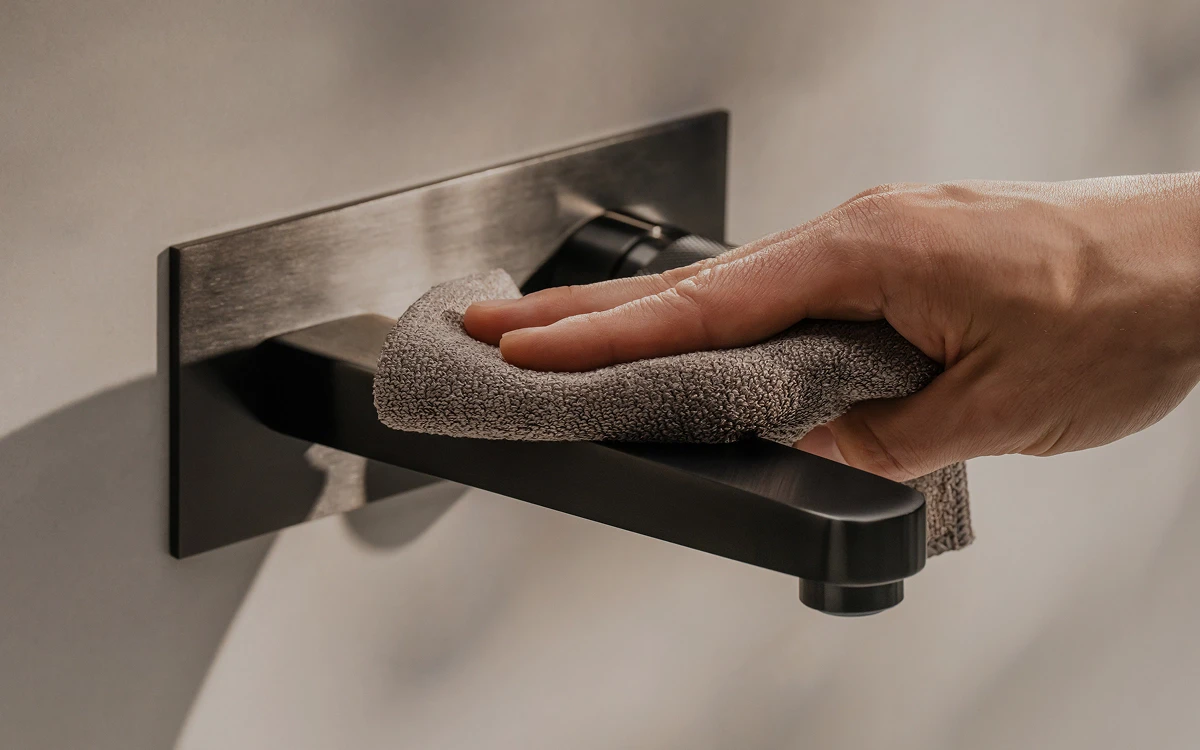
Bathroom and kitchen fittings, regardless of their finish, should be cleaned regularly, preferably after each use, so as to prevent the build-up of hard-to-remove stains. For daily maintenance of external surfaces, use a soft cloth (for example, a microfibre cloth) and a solution of water with a mild cleaning agent with a natural composition, then rinse the product thoroughly with clean water and wipe it dry. For more stubborn dirt, use a 10% citric acid solution with water. Apply this solution directly to the product or cover the product with a cloth soaked in the solution. After 10 minutes, rinse the product thoroughly with clean water and wipe it dry. It is not recommended to use rough or abrasive materials and corrosive or bleaching substances to prevent damaging the surface of the product. Comprehensive maintenance guidelines cover both bathroom and kitchen fittings – you can find more details in our dedicated manual.
To ensure the optimal operation of aerators fitted on bathroom and kitchen fittings, remember to regularly control the flow of water while removing any limescale deposits forming on the aerators’ surface. If the aerator can be unscrewed, you can immerse it in a 10% citric acid solution with water for about 15 to 30 minutes, as this will soften and dissolve any potential deposits. You can then gently clean the strainer with a soft brush to remove the remaining limescale. In mixers with built-in aerators, you can drape a damp cloth soaked in a citric acid solution over the spout, leaving it for 15 to 30 minutes. After this time, rinse the aerator thoroughly with water. Avoid using sharp tools so as not to damage the delicate components of the aerator.
To ensure the correct operation of a shower head, remember to regularly wipe the silicone nozzles with your hand to remove any limescale deposits that might be forming on their surface. Avoid using harsh cleaning agents that may damage the nozzles and the surface of the shower head. The shower head should be angled after each use to allow the remaining water to flow out. This is the easiest yet necessary way to reduce the build-up of limescale from the water inside the shower head. Tilting the shower head additionally reduces the risk of the product becoming prone to leaking, allowing the product to serve its purpose reliably for an extended time. We invite you to explore our comprehensive manual on this subject.
To ensure a problem-free operation of the hand shower, limescale deposits must be regularly removed from its surface, with particular attention paid to the silicone nozzles. Remember to regularly wipe the nozzles with your hand to remove any limescale deposits that might be forming on their surface. A toothpick or toothbrush can also be used to clean the spaces in between if there is a considerable build-up of limescale. For more stubborn dirt, immerse the hand shower in a 10% citric acid solution with water for about 30 minutes to dissolve the limescale and then wipe across the holes with a soft brush. It is not recommended to use rough or abrasive materials and corrosive or bleaching substances to prevent damaging the surface of the product. From time to time, it is recommended to unscrew the hand shower and flush it from the inside to remove any dirt blocking the flow of water. Regular maintenance ensures uninterrupted water flow and prolongs the functionality of the hand shower.
Products made from the M+ composite material and ceramics should be cleaned regularly, preferably after each use, using a soft sponge and a cleaning agent with a natural composition, free of dyes and abrasive or bleaching properties. For more stubborn dirt, use a 10% citric acid solution with water and leave it for 2–3 minutes. After cleaning, rinse the product thoroughly with water and dry it with a cotton cloth.